

Same performance.
Sustainable packaging built
with verified credentials.
Third-party verified certificate required
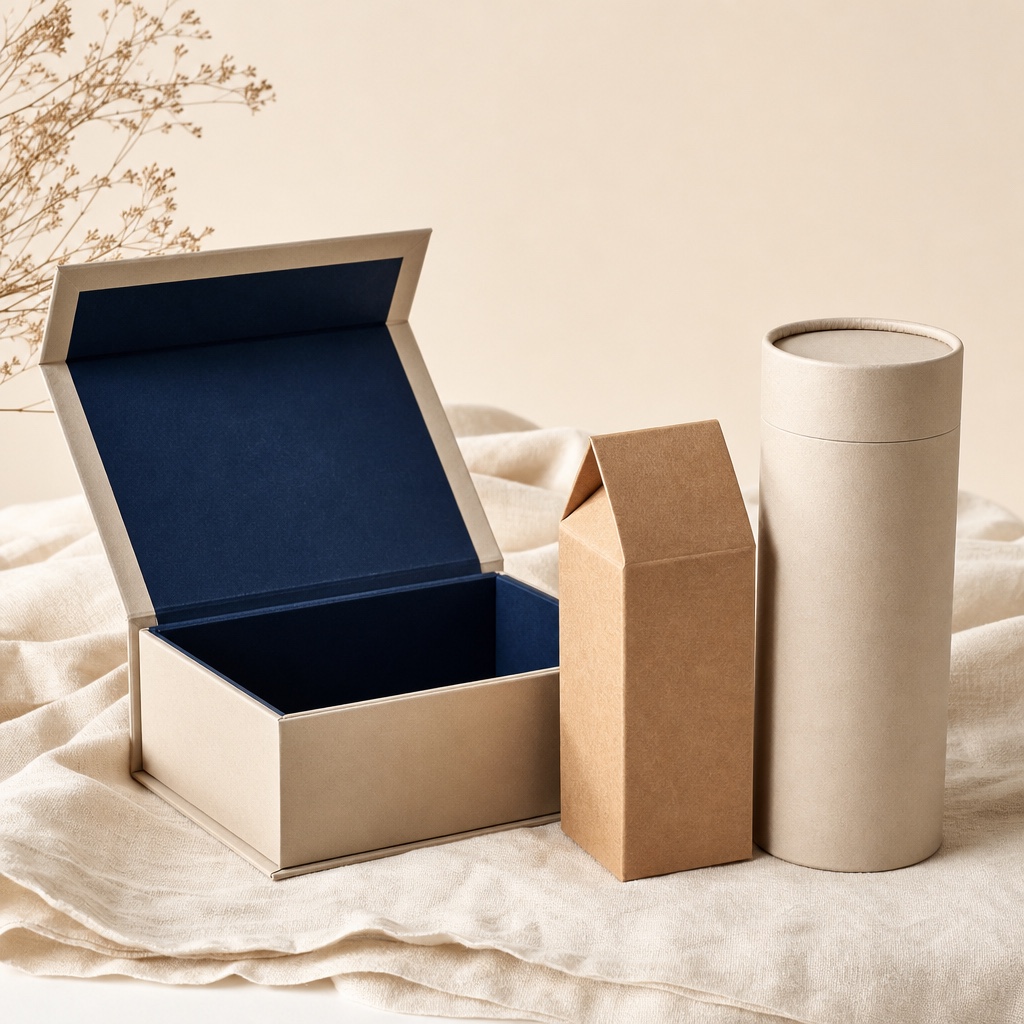
FSC kraft · Recycled paper board
Most standard formats available in PCR
EU PPWR refillable format compliant
Aluminium-free laminate alternatives
FSC (paper) · TÜV bio-based verification
PCR content for PPWR single-use targets
Custom eco tooling: 80–100 days
Claims need certificates.
We bring both.
Sustainable packaging is a crowded space full of greenwashing risk. 'PCR content' without a third-party certificate is just a factory claim. Bamboo packaging without FSC verification is still a disposability story. Vella requires verified credentials for every eco claim — PCR certificates, FSC documentation, and bio-based verification — and passes them to you to use in your brand communications.
Eco packaging, with numbers.
For most PP and HDPE formats, 30–100% PCR is achievable — 30% is the cost-effective entry point, 50% the credible-claim standard, 100% possible on select formats — with a GRS or RCS certificate from the resin supplier on every order. PCR stock components start from about 500 pieces through partner factories already running the item in PCR and ship in 35–50 days; custom eco tooling runs 80–100 days. The trade-off is colour: natural PCR runs grey to beige, so clear designs above about 50% are tinted or frosted, and white or pastel needs a virgin-rich outer layer or a sprayed coat.
PCR and eco material routes: what each one can and cannot do
| Route | Typical spec | Colour / clarity limit | Claim it supports | Watch-out |
|---|---|---|---|---|
| PCR PET / PETG (bottles, thick-wall jars) | 30–100% recycled content; clear grades exist | Slight grey or yellow cast; haze rises with PCR share — tint, frost or go opaque above about 50% | Recycled content | Alcohol above ~30% still rules out PET, recycled or not |
| PCR HDPE / PCR PP (bottles, jars, caps) | 30% entry · 50% credible-claim standard · 100% select formats | Natural lots run grey to beige and shift lot to lot; design on a grey or natural base, add colour by masterbatch, prefer mid and dark tones; white and pastel need a virgin-rich outer layer, a sprayed coat or an agreed tint band | Recycled content | A wider ΔE tolerance is agreed in writing before the golden sample is signed |
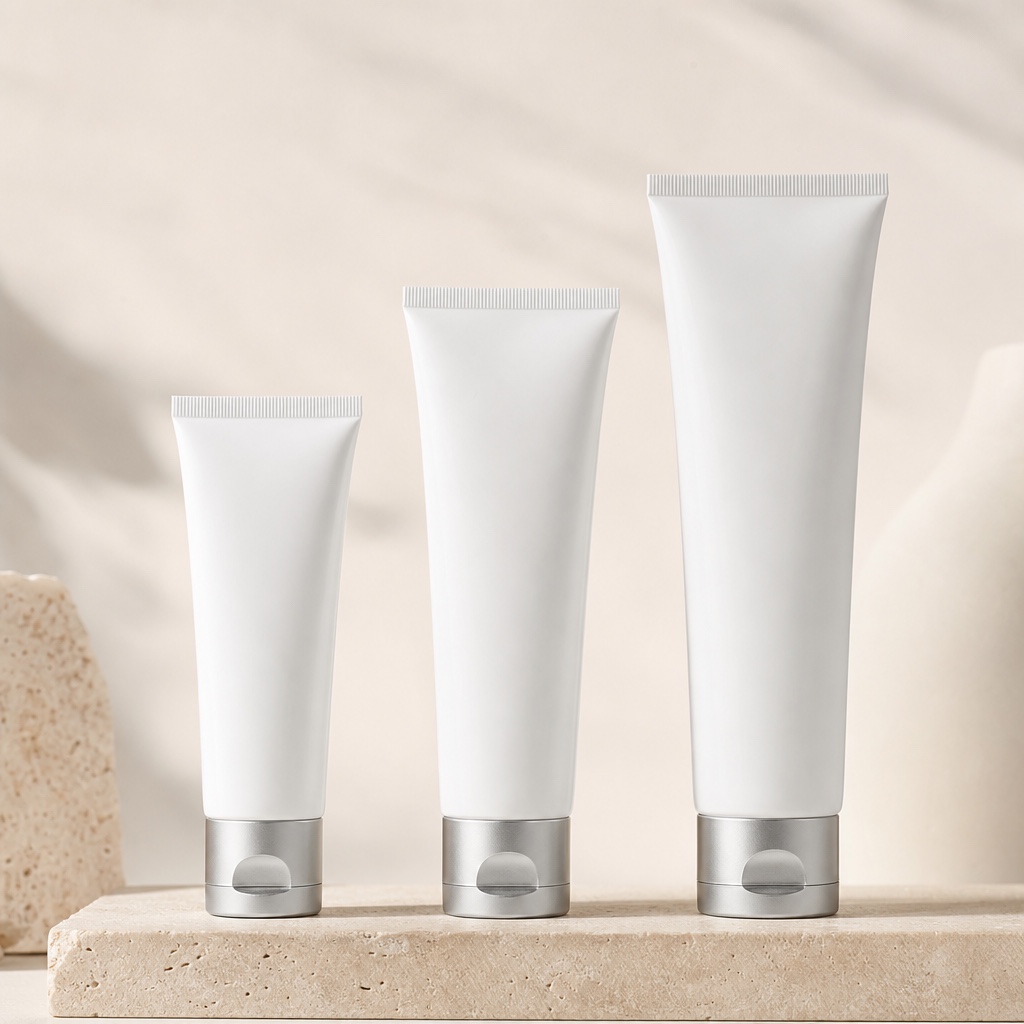
| Mono-material PE tube | PE body, PE shoulder, PE cap, PE-compatible label; single-layer or PE-barrier | Same print area as a standard tube (Ø13–Ø60, 40–186 mm unwrap) | Recyclability | A five-layer EVOH or ABL tube is not mono-material; a PP cap on a PE tube breaks the claim |
| Mono-material PP jar | PP outer, PP inner lid, PP cap; no PMMA sleeve, no metal trim | Opaque or translucent; stock colours or moulded-in colour | Recyclability | An acrylic (PMMA) outer or a plated ring ends the mono-material claim |
| Bamboo sleeve or lid | Bamboo shell over a PP or PCR-PP inner that actually touches the formula; FSC chain of custody on the bamboo | Natural grain and tone vary piece to piece — colour is judged as a range, not a single ΔE | Renewable material; FSC | Not mono-material and not a recycled-content claim; the inner is the functional pack |
| Glass or aluminium outer + PP / PCR-PP refill | Stock glass on public moulds; anodised aluminium 25–40 days | Anodised colour needs a retained control sample between batches | Reuse; recyclability | Aluminium needs an internal lacquer specified against the formula |
| Paper-based (cartons, paperboard sticks, paper tubes) | FSC-certified kraft and board; hot stamp and emboss | Uncoated kraft shows fibre; full print on coated board | Recyclability; FSC | Paper tubes only for dry and semi-dry formulas |
Certificates that make the claim defensible
| Scheme | What it verifies | Threshold and scope | Who holds it |
|---|---|---|---|
| GRS — Global Recycled Standard | Recycled input, chain of custody through every processor, plus social, environmental and chemical criteria at each site | Products with 20% or more recycled content; the GRS logo on pack needs 50% or more | Resin supplier and each converter; a transaction certificate per lot |
| RCS — Recycled Claim Standard | Presence and amount of recycled material, chain of custody only | From 5% recycled content upward | Resin supplier; transaction certificate per lot |
| Bio-based verification (TÜV or equivalent) | Bio-based carbon share of sugarcane bio-PE | Per resin grade | Resin supplier |
| FSC chain of custody | Board, kraft or bamboo traced from certified forest to finished component | Per order, mill to converter | Board mill and carton or bamboo converter |
| Heavy-metals report on the PCR lot | Pb + Cd + Hg + Cr(VI) | ≤100 ppm (EU 94/62/EC) | Third-party laboratory |
Indicative MOQ, tooling and lead time by route (partner-factory practice)
| Route | Realistic minimum | Tooling | Factory-gate lead time |
|---|---|---|---|
| PCR-HDPE / PCR-PP / PCR-PET stock bottle or jar, natural or stock colour | From about 500 pcs where a partner factory already runs the item in PCR; otherwise the resin lot sets it | None (stock mould) | 35–50 days for PCR stock formats |
| PCR stock component + screen-printed logo | 2,000 pcs | Screen per colour, trivial | +5–7 days (plate 2–3 days) |
| PCR stock component + sprayed custom colour | 2,000–5,000 per component shape | Spray line set-up per shape | 30–40 days |
| Moulded-in custom colour on PCR resin | 5,000–10,000 | Masterbatch batch | 35–50 days |
| Mono-PE tube, printed | Industry floor 5,000–10,000 per SKU; 3,000 negotiable | Printing plates RMB 200–300 (≈USD 30–45) per design | 15–20 days from sample-tube approval; ±10% over/under |
| Refill pod system | Stock outer + custom pod from about 1,000; custom outer from about 3,000 plus tooling | Closure-size part roughly USD 3,000–10,000 | 40–55 days stock; 90–110 days custom |
| Custom eco tooling (private bottle or jar mould) | 3,000–10,000 pcs | RMB 25,000–70,000 (≈USD 3,500–9,700), paid 30/40/30, rated 800,000 cycles, owned by the brand | 45–60 days for the mould; 80–100 days for the eco programme |
QC thresholds: the standard battery plus what PCR adds
| Gate / test | Method | Pass threshold |
|---|---|---|
| IQC — recycled-content certificate | GRS or RCS transaction certificate matched to the resin lot number | Certificate present and lot-matched before moulding starts |
| IQC — colour chip | Moulded chip from the lot against the signed standard under D65 | Within the agreed (wider) ΔE for that PCR grade |
| IQC — odour and heavy metals | Odour check on the lot; third-party heavy-metals report | No off-odour; Pb + Cd + Hg + Cr(VI) ≤100 ppm |
| Vacuum leak (airless, sprayer) | −0.08 MPa for 15 min | ≤0.5% loss; no trace on paper |
| Decoration adhesion | 3M 600 tape over print and hot stamp; 3M 810 over 2 mm cross-hatch on spray | No lift; hot-stamp loss ≤0.5 mm²; pencil hardness ≥2H on sprayed surfaces |
| Thermal cycling | Filled, 48°C and −15°C, 24–48 h each stage, 2 h recovery | No cracking, warping, leakage or colour change |
| Drop | 76 cm to 1.5 m at 45° depending on format | No functional damage |
| Pump life | Continuous actuation, dose weighed 50 strokes ×3 | ≥1,500 cycles; priming ≤5–10 strokes |
| Closure torque | Torque meter after application | Opening 0.2–0.7 N·m on standard caps; no thread strip |
| Formula compatibility | Component held with your actual bulk at 48°C for 30 days beside ambient and cold controls | No discolouration, odour, swelling, cracking or decoration attack |
| Acceptance sampling | ISO 2859-1 | AQL agreed per defect class; OQC report before shipment |
Compatibility rules that recycled content does not change
| Formula | Hard rule | Eco route that still passes |
|---|---|---|
| Ethanol above ~30% (toners, perfumes, sprays) | Never PET — recycled or virgin; glass or copolyester | Glass outer with PCR-PP closure; PETG where clarity is needed |
| Acetone, essential oils, fragrance concentrates | Attack AS and craze PMMA; swell standard gaskets | Glass; PP or HDPE where plastic is required — PCR-HDPE is fine |
| pH below 4 (AHA / BHA) | Glass or PP with a 316-stainless or plastic pump spring | PCR-PP bottle or glass outer |
| Vitamin C, retinol, oxygen-sensitive actives | Need a barrier: EVOH OTR ~0.2 versus 150–300 for single-layer PE | Keep the five-layer EVOH tube and make the recycled-content claim on the cap and carton instead |
| Creams in acrylic-look jars | PMMA must never touch the bulk | Mono-PP double-wall jar, or PP inner cup in a glass outer |
| Any format with plated trim | Nickel plating no skin contact; plating is exterior only | Anodised aluminium or bamboo accents keep the recyclability story cleaner |
Decoration on PCR and eco components × indicative MOQ
| Process | Suits | Indicative floor | Note for eco packs |
|---|---|---|---|
| Screen print | PCR PP / HDPE / PET, glass | 2,000 | Ink is not a claim-breaker; ≤2 passes with hot stamp |
| Hot stamp | Plastics, glass, cartons | Small one-off die; ~1,000 pieces per hour | 12–25 µm foil; check the foil is on the recyclability protocol you cite |
| Sprayed colour | PETG, PP after flame treatment, glass | 2,000–5,000 per shape | Used to hide the grey base of PCR for white or pastel designs |
| Laser marking / engraving | Bamboo, aluminium, plastic | No tooling; seconds per piece | The natural choice for bamboo lids — no ink, no coating |
| Electroplating / vacuum metallising | Caps and collars | ~10,000; ~6 h per metallising cycle | Exterior only; breaks a mono-material claim |
| Full-wrap label / shrink sleeve | Any stock bottle | ~100–500 | Label must be PE-compatible on a mono-PE pack |
Six-module program for eco packaging
| Module | What we do for this product | Deliverable |
|---|---|---|
| 1 · Spec | Separate the three claims (recycled content, recyclability, reuse); fix resin, PCR percentage, base colour and masterbatch, the mono-material component list and the wider ΔE band | Packaging Spec Sheet |
| 2 · Source | Route to partner factories already running the item in PCR or mono-material; quote virgin versus PCR side by side with certificate scheme named | Quote + Supplier Options |
| 3 · Sample | Stock PCR samples first, then decorated samples; 48°C / 30-day contact test with your bulk; colour chip signed under D65 | Golden Sample + Compatibility Report |
| 4 · Mould | Only when a private eco shape is justified: DFM, 30/40/30 payment, ownership clause, 800,000-cycle rating | Mould Ownership Agreement |
| 5 · QC | Certificate-to-lot match at IQC, colour and seal checks in process, OQC to agreed AQL, heavy-metals report on the PCR lot | Inspection Report |
| 6 · Ship | Ten-node calendar with ×1.3 buffer and CNY +15 days; certificates shipped with the goods for your compliance file | Production Calendar + Packing Standard |
The full route-by-route method, including the UK recycling-mark date and EU PPWR context, is on the sustainable and refillable packaging solution and the PCR cosmetic packaging guide. Check the formula first against the formula–packaging compatibility matrix, and the test battery against our cosmetic packaging quality standards. If you are comparing suppliers, use how to evaluate a China packaging supplier. Sibling formats: refillable packaging, cosmetic tubes (mono-PE and PCR laminate) and paper packaging.
Related standards: mould cost and ownership · lead time and China production calendar · decoration process comparison · export packing and transit standards · all engineering references
Eco credentials only hold if someone verifies them.
The biggest risk in eco packaging sourcing isn't finding sustainable options — it's having a supplier claim PCR content that isn't verified. We build verification into the sourcing process so your brand claims are defensible.
Third-party PCR Certificate
We require a GRS (Global Recycled Standard) or equivalent certificate from the resin supplier — not the packaging factory — for every PCR order. This is the document that makes your '30% PCR content' claim defensible on EU shelves.
Bio-material Documentation
Sugarcane bio-PE and bamboo have specific certification requirements. We require TÜV certification for bio-based resin content and FSC chain-of-custody for bamboo-derived components.
Recyclability Verification
A mono-material PE tube that's contaminated with a non-PE label or a PP insert is not mono-material. We verify that every component in an eco pack is compatible with the recyclability claim before approving production.
PPWR Format Check
We maintain an updated PPWR compliance matrix for cosmetic packaging categories — reusability targets, PCR content thresholds and recyclability requirements by pack type. We check your format against it before you commit to tooling.
Frequently asked about eco packaging.
Often paired with eco packaging.
Read before you brief us.
- Eco-Friendly & PCR Cosmetic Packaging from China: A Brand's Guide
- GRS vs RCS for Recycled Cosmetic Packaging: Which Certificate, Who Holds It, What It Proves
- How Much PCR Can a Cosmetic Bottle Have Before Colour and Clarity Suffer? Specifying 30–100%
- Which Lipstick Decoration Forces a High MOQ? Electroplating, Spray, Hot Stamp and Anodising Compared
- PCR Cosmetic Packaging with GRS Certificates at Low MOQ from China: What Is Realistic
- Sustainable Cosmetic Packaging: PCR vs Recyclable vs Refillable vs Biodegradable
Not sure what to specify? Use the Packaging Spec Builder — formula, volume, quantity and launch date in, a 12-line spec sheet with MOQ verdict and order-by date out.
Tell us what you need,
we'll find it.
Send a brief — format, size, quantity, finish — and we'll come back with factory options, material recommendations and an indicative price within 24 hours.