is the package.
Everything you need to
brief us in one page.
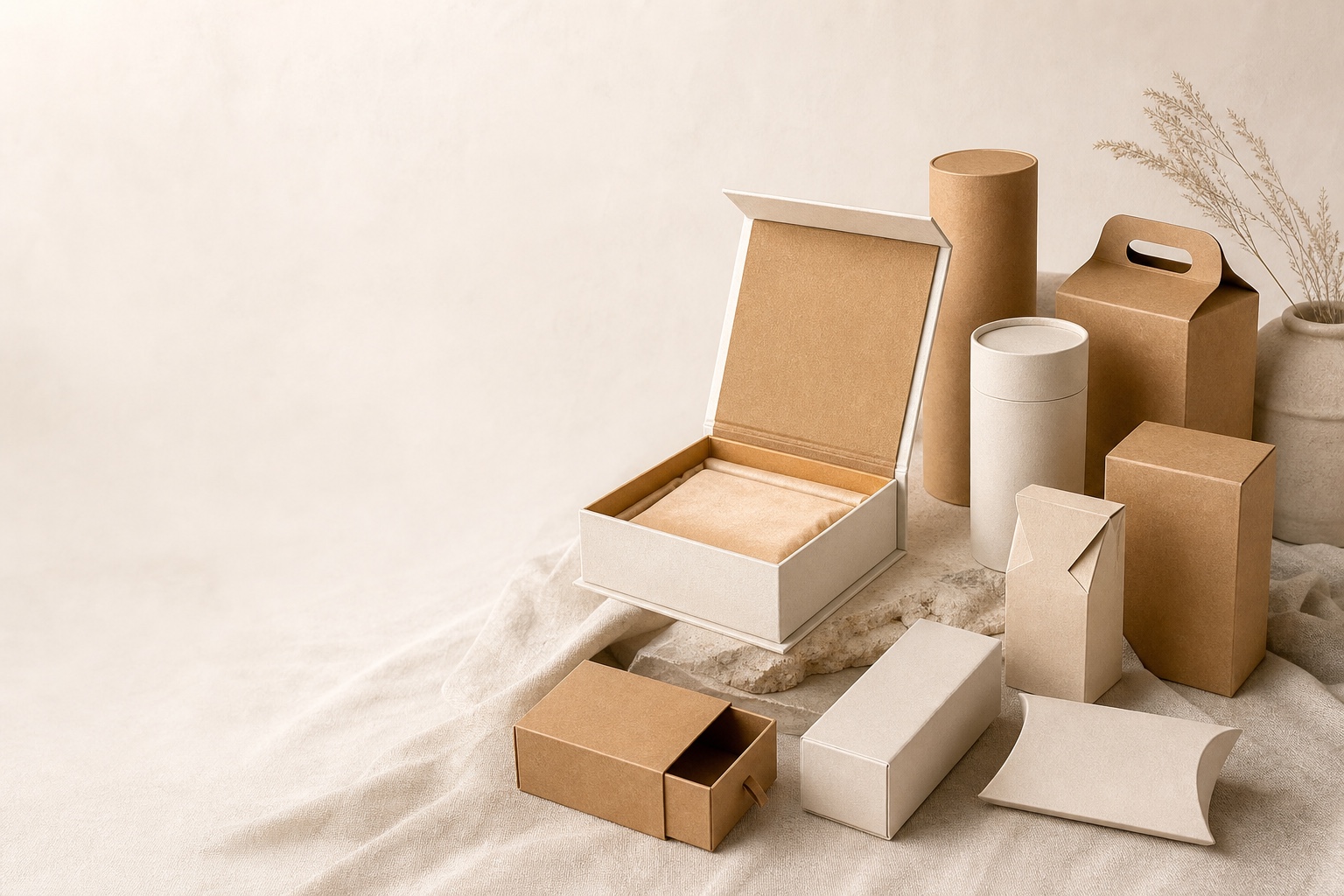
Drawer box · Clamshell · Mailer box
Recycled board · Grey board · Honeycomb
Soft-touch velvet · Aqueous coating
Blind emboss · Deboss · Spot UV
Soy-based inks · Water-based varnish
Digital print available for short runs
Paper pulp tray · Tissue paper fill
Rigid box: 35–60 days
The outer box is half
the unboxing story.
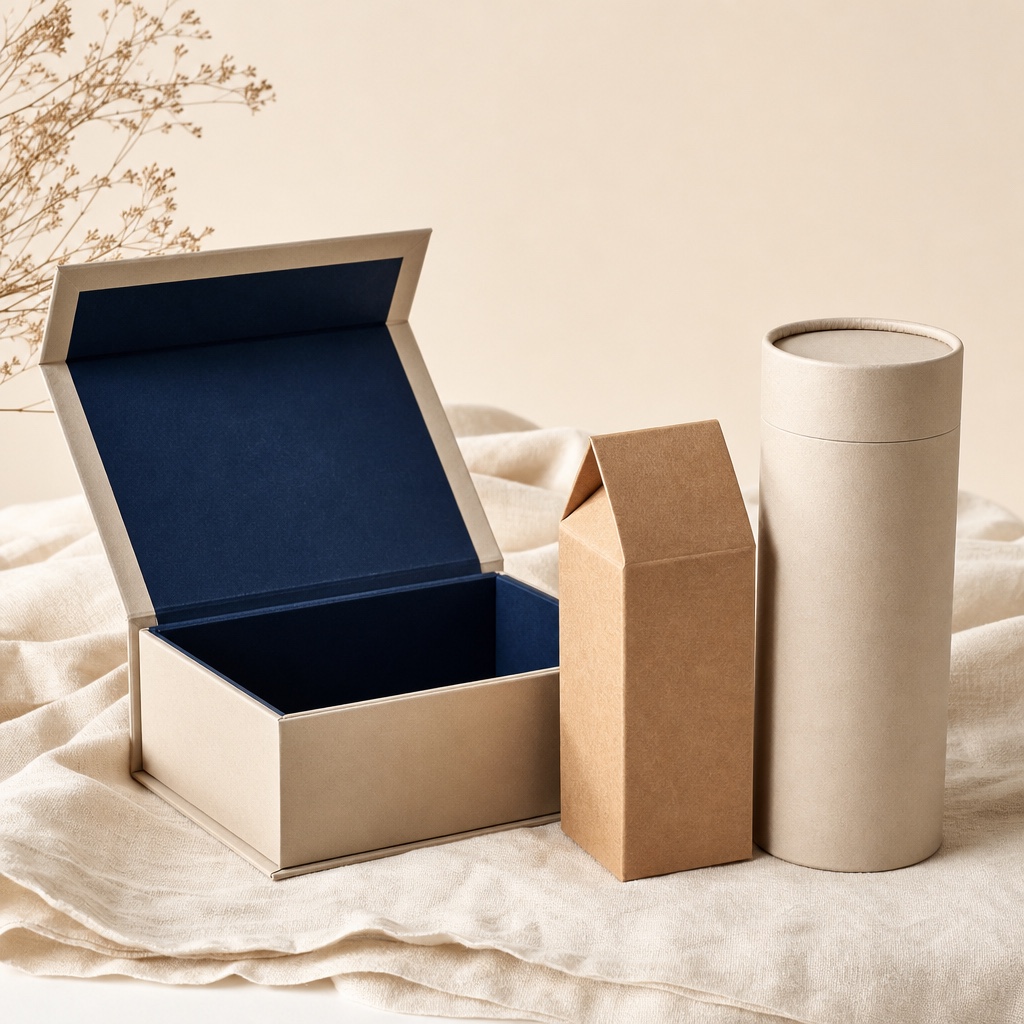
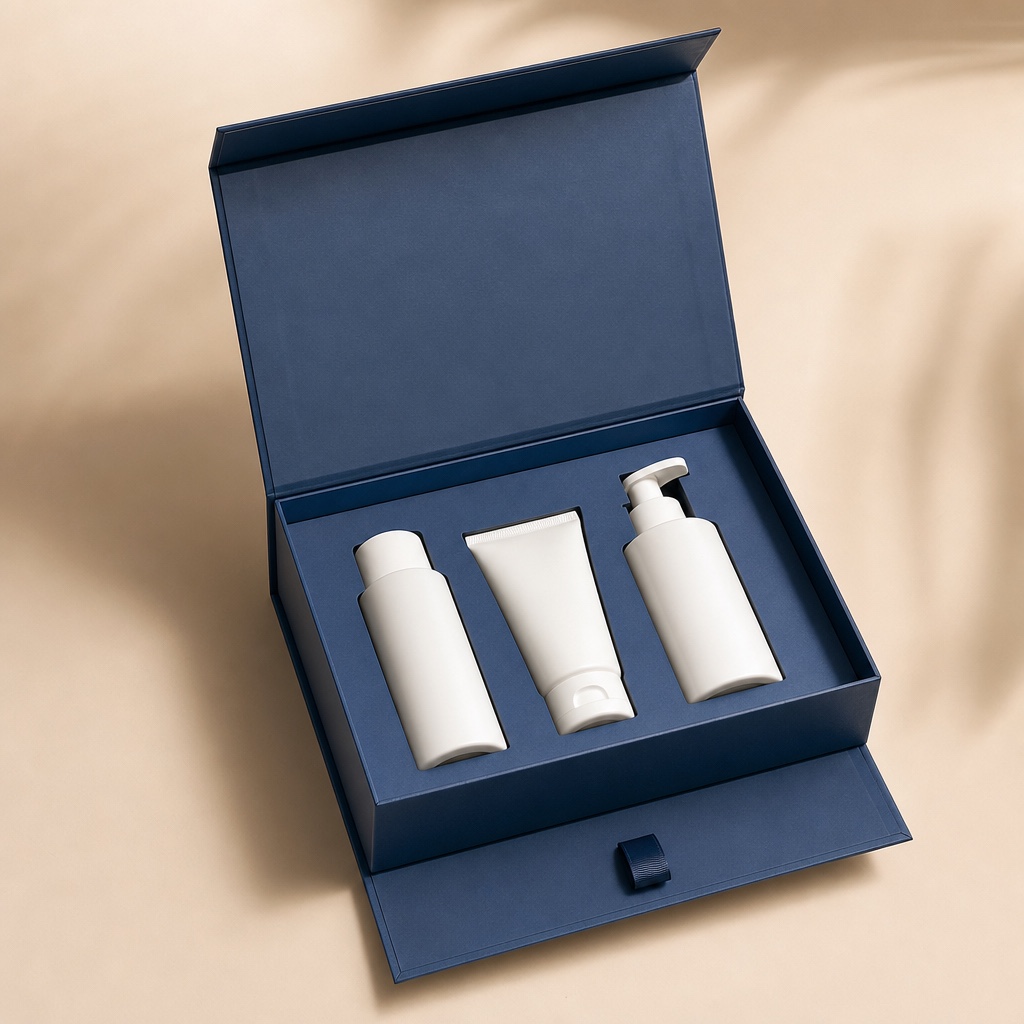
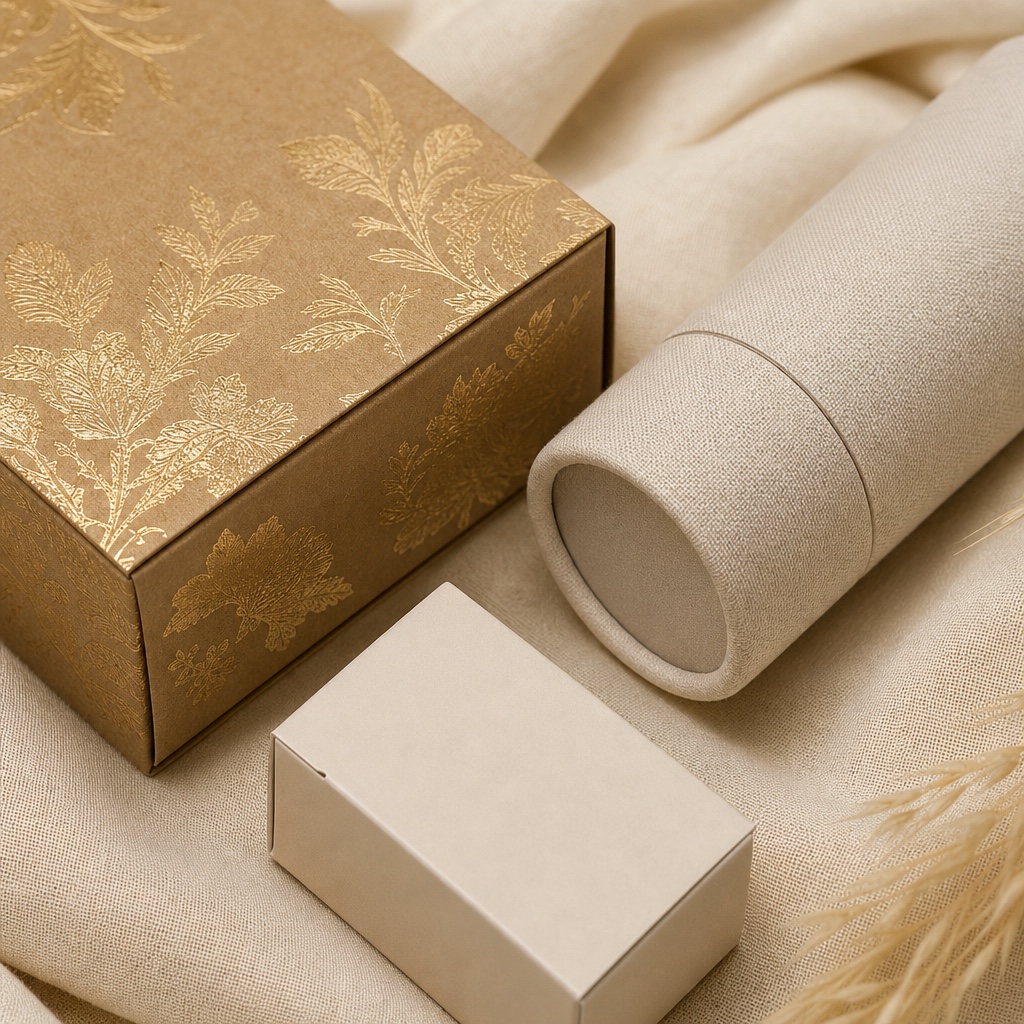
For most skincare and colour products, the primary pack (bottle, jar, tube) is inside a paper carton or box — and that outer packaging is what the consumer picks up at retail and what they photograph for social media. The paper pack is the brand's first physical statement. We help brands use structure, board weight, print and finish to communicate the right positioning before the consumer even opens the box.
Paper packaging, with numbers.
A cosmetic folding carton runs on 300–350 gsm GC1 coated board (400–450 gsm for glass or sets), carries an industry floor of 2,000–5,000 pieces on offset print (digital reaches about 100–500) and ships 10–15 days after artwork approval; a rigid box on a greyboard core starts around 1,000–2,000 pieces, costs 4–10× a carton and takes 35–60 days. Foil, emboss and soft-touch laminate add a die or a pass, not a minimum. Colour is accepted at ΔE ≤1.5 under D65 light against the signed proof, and the packed set is tested to ISTA 3A-style standards before it boards a 25–40 day sea voyage.
Specification: board, weight and construction by format
| Format | Board and weight | Construction | Typical use | |
|---|---|---|---|---|
| Folding carton (tuck-end, crash-lock) | 300–350 gsm GC1 coated board for a 50–100 ml bottle; 400–450 gsm for glass or multi-product sets; spec written as 350 ± 10 g/m² | Printed, laminated, die-cut, glued; ships flat | Offset CMYK + up to 4 Pantone; hot stamp, emboss, spot UV | Outer carton for bottles, jars, tubes |
| Rigid box (lid-and-base, drawer, book-style) | Greyboard core, typical partner-factory range 1.2–2.5 mm, wrapped in 128–157 gsm art paper or specialty paper | Chipboard core cannot fold; wrap glued by hand or machine; EVA, thermoform or pulp insert | Offset on the wrap; soft-touch laminate, foil, blind emboss | Gift sets, prestige launches, refill outer packaging |
| E-flute mailer / display carton | E-flute micro-corrugated 1.5–2 mm (about 286 flutes per metre) with a printed liner | Die-cut, self-locking | Flexo on the liner or offset-laminated | E-commerce shippers, subscription boxes |
| Paper tube (spiral-wound) | Kraft or white board plies; push-up or twist base | Wound, cut, labelled or wrapped | Label or wrap print; hot stamp | Lip balm, solid perfume, deodorant, shampoo bar |
| Paperboard stick | Paperboard sleeve with push-up base | Formed and glued | Wrap print | Balms and solid sticks, dry formulas only |
| Shipping case | Single-wall B or C flute 3–5 mm; double-wall A/B, B/C 6–8 mm | FEFCO 0201 regular slotted case; acrylic tape | One-colour flexo shipping mark | Export outer — specified on the packing standard, not the retail brief |
Print and finish × indicative MOQ
| Process | Suits | Indicative floor | Set-up | Note |
|---|---|---|---|---|
| Offset print, CMYK + Pantone | Folding carton, rigid-box wrap | 2,000–5,000 cartons; below about 1,000 the printer cannot nest the sheet economically | Plates per colour, low | Pantone reference locked before plates — batch drift of ΔE 3–4 is the classic failure |
| Digital print | Simple folding cartons, sleeves, labels | About 100–500 | None | Reaches lower for launches and tests; fewer finish options |
| Rigid box | Gift boxes, sets | 1,000–2,000 | Cutting dies; hand assembly | Costs 4–10× a folding carton; cut for the exact bottle after glass is confirmed, never in parallel |
| Hot stamp (foil) | Carton, rigid wrap, paper tube | No extra floor; small one-off die | Die at 150 ± 5°C; 12–25 µm foil; ~1,000 pieces per hour | ≤2 passes combined with print |
| Blind emboss / deboss | Carton, rigid wrap | No extra floor; die | Brass or magnesium die | Best on soft-touch or uncoated stock |
| Soft-touch (velvet) laminate | Carton, rigid wrap | No extra floor | Laminating pass | Scuffs and shows fingerprints — anti-fingerprint layer recommended; interleave in transit |
| Matte / gloss laminate, aqueous or UV varnish | All | No extra floor | Pass | Spot UV over matte is the tactile-contrast standard |
| Window patch, ribbon, magnet closure | Rigid box, carton | Adds set-up | Hand work | Each adds a hand operation and a day or two |
Indicative MOQ, tooling and lead time by route (partner-factory practice)
| Route | Realistic minimum | Tooling | Factory-gate lead time |
|---|---|---|---|
| Folding carton, offset, standard finish | 2,000–5,000 | Cutting die, low cost; plates per colour | 10–15 days after artwork approval; 20–30 days including proofing |
| Folding carton, digital, short run | 100–500 | None | 7–12 days |
| Folding carton + foil + emboss + soft-touch | 2,000–5,000 | Foil die, emboss die | +3–5 days over standard |
| Rigid box with insert | 1,000–2,000 | Dies for wrap and board; insert tool if thermoformed | 35–60 days |
| Paper tube, labelled or wrapped | Typical partner-factory range 3,000–5,000 | Winding mandrel per diameter | 20–30 days |
| FSC-certified board on any of the above | Same as the route | None; chain-of-custody paperwork per order | Confirm at brief stage — FSC is quoted as standard, not added later |
| Shipping cases | About 100 | None | 7–10 days |
QC thresholds for cartons, rigid boxes and tubes
| Test | Method | Pass threshold |
|---|---|---|
| Colour | Against the signed proof and golden sample under D65 standard light | ΔE ≤1.5 for printed cartons; family components judged side by side |
| Board weight | Balance, 100 × 100 mm cut | 350 ± 10 g/m² (or the specified grammage ±10) |
| Print register | Loupe, 0.1 mm | Main image ≤0.1 mm; secondary ≤1 mm (2 mm on E-flute) |
| Foil / print adhesion | 3M 600 tape pressed 10 passes, pulled at 45° | No lift; hot-stamp loss ≤0.5 mm²; no ghosting on 10–25% of the image, no serrated edges |
| Lamination | Visual and peel | Delamination area ≤10 cm²; flute-to-liner edge lift ≤2 mm on E-flute |
| Die-cut and crease | Visual; fold test | Die-cut burr ≤30 mm and no more than 3; cut drift ≤1 mm; tuck tab inserted 5 times with damage ≤2 mm² |
| Rub and solvent resistance | Gauze, 10 rubs after 24 h contact with the bulk; 50 strokes of ethanol on shipping marks | No fading, transfer or ink loss |
| Moisture | Carton moisture meter | ≤8% board moisture at packing |
| Folding endurance (retail-opened cartons) | 150 × 15 mm strip folded at 135° to failure | Per the specified cycle count |
| Heavy metals | Third-party laboratory | Pb + Cd + Hg + Cr(VI) ≤100 ppm |
| Acceptance | ISO 2859-1 | AQL agreed per defect class; 0-accept on colour and structure at Level II |
Transit: how printed paper packaging survives 25–40 days at sea
| Layer | Specification | Purpose |
|---|---|---|
| Inner protection | Laminated outer cartons with corner protectors; soft-touch and foil surfaces interleaved with tissue or polythene | No scuffing of velvet laminate or foil in transit |
| Shipping case | FEFCO 0201, single-wall B/C for cartons, double-wall for rigid boxes and sets; 250 g E/C liner ≈545 g/m², bursts about 8.2 kgf/cm²; 300 g double-E/B ≈885 g/m², about 13.7 kgf/cm² | Edge crush and box compression sized to the pallet load |
| Stacking | Stacking limit stated on the pallet, ≤1.5 m for printed cartons; BCT with a safety factor of 3–5 for sea freight; GB/T 4857 stacking method (ISO 2234) | No crush on the bottom carton |
| Moisture | Carton moisture ≤8%; polythene liner where humidity is high | Board that stays flat and glue that holds |
| Transit testing | ISTA 3A-style test on the packed set where glass travels inside the rigid box | Breakage on arrival ≤0.3% target; glass in suspended trays rated ≥200 kg |
| Route | Sea 25–40 days to Europe or the US East Coast, 15–20 to the West Coast; air adds about 30% to landed cost | Sea by default — empty packaging is volume, not weight |
Compatibility: which paper format for which product
| Product | Recommended format | Hard rule |
|---|---|---|
| 50–100 ml bottle or jar | Folding carton 300–350 gsm GC1 | Carton is cut to the confirmed bottle drawing, not the CAD |
| Glass bottle or heavy jar | Folding carton 400–450 gsm or rigid box with insert | Pack to ISTA 3A-style standards; one cell per bottle |
| Gift set, refill starter kit | Rigid box with EVA, thermoform or pulp insert | Insert cut after all components are confirmed |
| Lip balm, solid perfume, shampoo bar | Paper tube or paperboard stick | Dry and semi-dry formulas only |
| Cream or liquid formula | Not a paper primary pack — mono-PE tube or PP jar inside a carton | Paper tubes fail on moisture |
| EU / UK retail | Carton with label space for the recycling mark and the 82-allergen list | Leave the space at artwork stage; a reprint after the first run is the common mistake |
Six-module program for paper packaging
| Module | What we do for this product | Deliverable |
|---|---|---|
| 1 · Spec | Fix format, board grade and grammage, greyboard thickness, wrap paper, print method, finishes, insert type, Pantone references, ΔE ≤1.5 and the label space for your markets | Packaging Spec Sheet |
| 2 · Source | Route cartons, rigid boxes and tubes to partner converters matched to your run size — digital, offset or rigid-box specialists — with FSC quoted as standard | Quote + Supplier Options |
| 3 · Sample | White dummy for fit, then printed proof and a finished pre-production sample; fit checked against the actual bottle, not the drawing | Golden Sample + Compatibility Report |
| 4 · Mould | Cutting dies, foil and emboss dies held and registered to you; insert tool where thermoformed | Mould Ownership Agreement |
| 5 · QC | IQC on board lots, in-process colour and register checks under D65, OQC to agreed AQL with 0-accept on colour and structure | Inspection Report |
| 6 · Ship | Ten-node calendar with ×1.3 buffer and CNY +15 days; shipping-case specification, stacking limit and moisture ≤8% written into the packing standard | Production Calendar + Packing Standard |
Shipping-case grades, flute types and stacking rules are on export packing and transit standards; foil, emboss and laminate options against every other process on the decoration process comparison. For boxes that carry several components, see gift sets and the fragrance packaging solution, where the rigid box is cut after the flacon is confirmed. The test battery is on cosmetic packaging quality standards; supplier screening on how to evaluate a China packaging supplier. Sibling formats: eco packaging and lip packaging (paperboard sticks).
Related standards: lead time and production calendar · factory audit checklist · sustainable and refill packaging (FSC and paper-based routes) · low-MOQ cosmetic packaging · all engineering references
Four paper pack checks that prevent retail rejection.
Paper packaging that looks stunning in a press proof can fail at retail in four ways: colour drift, structural collapse, barcode failure and FSC claim non-compliance. Vella checks all four before production approval.
Colour Delta E Measurement
We measure colour accuracy against master press proofs using a spectrophotometer. Any panel with a Delta E above 3.0 (visible to the naked eye) is flagged for reprint. Pantone spot colours are approved against the master at press-ready stage.
Structural Load Test
Shelf-stacked retail cartons must support 3x their own weight without deformation. We test 5 finished sample cartons under load before production sign-off — collapse at retail is a delistment risk.
Barcode Verifier Scan
GS1 barcode compliance requires scan grades of B or above (ANSI). A carton that doesn't scan at checkout creates returns. We verify barcode placement and print quality on every new carton design before the print run.
FSC Chain-of-Custody
FSC claims must be traceable to a certified board mill via chain-of-custody certification. We require the factory's FSC CoC certificate for every FSC-certified order — the claim isn't valid without it.
Frequently asked about paper packaging.
Often ordered with paper packaging.

Read before you brief us.
- Custom Printed Folding Carton MOQ and Paper Weight (300–400 gsm) from China
- EVA, Moulded Pulp or Paper Insert for a Cosmetic Gift Set: Protection, Cost and Sustainability
- Rigid Box vs Folding Carton for a Skincare Gift Set: Cost, MOQ and Transit Protection
- Soft-Touch, Foil Stamp or Emboss on Cosmetic Cartons: MOQ, Cost and Colour Tolerance
Not sure what to specify? Use the Packaging Spec Builder — formula, volume, quantity and launch date in, a 12-line spec sheet with MOQ verdict and order-by date out.
Tell us what you need,
we'll find it.
Send a brief — format, size, quantity, finish — and we'll come back with factory options, material recommendations and an indicative price within 24 hours.