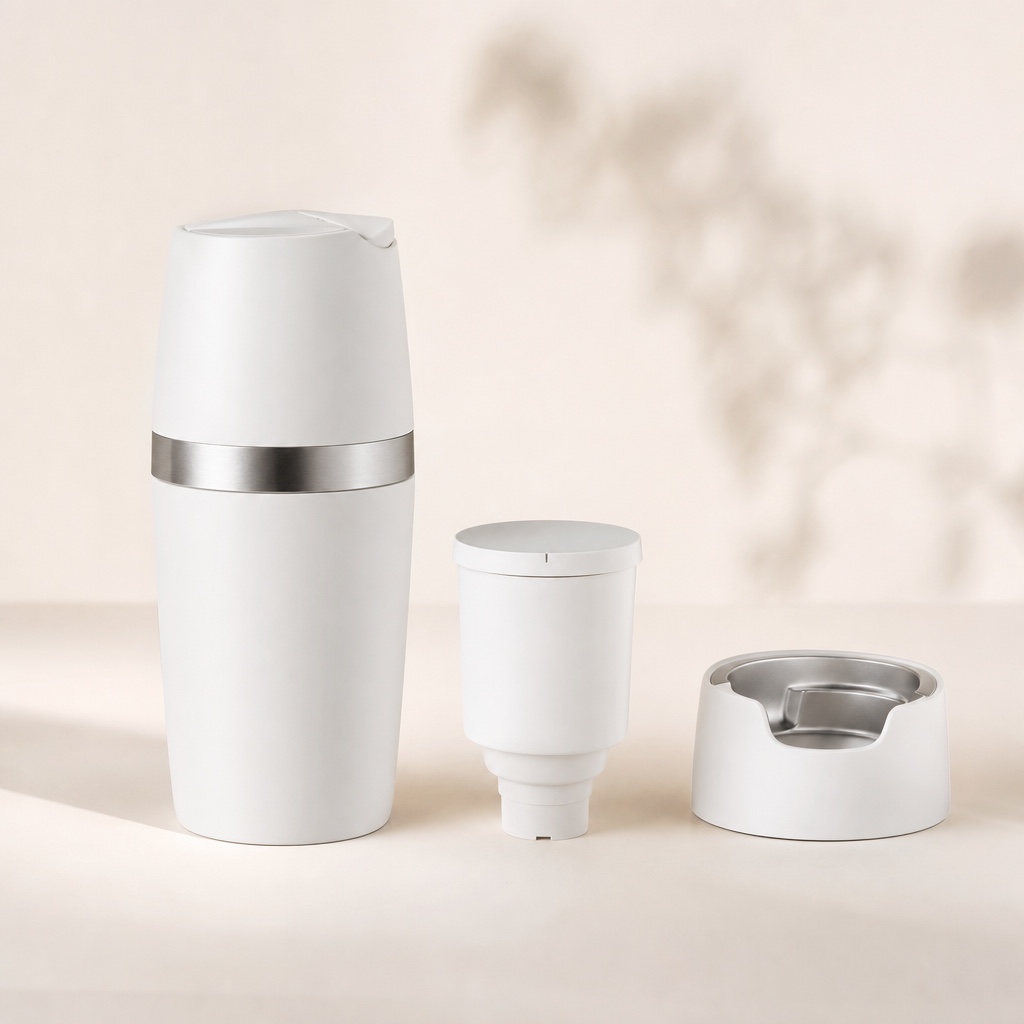
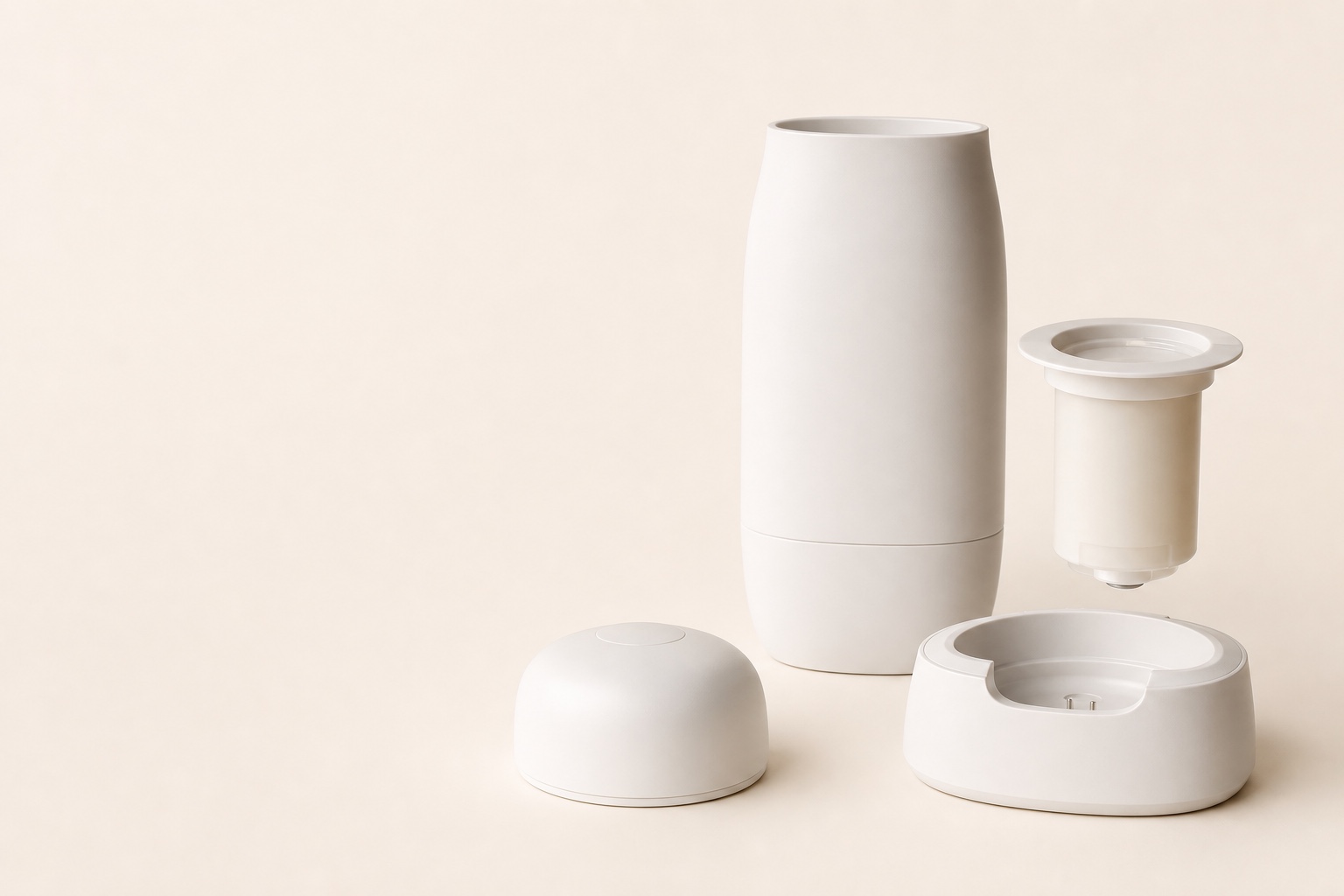
Refill forever.
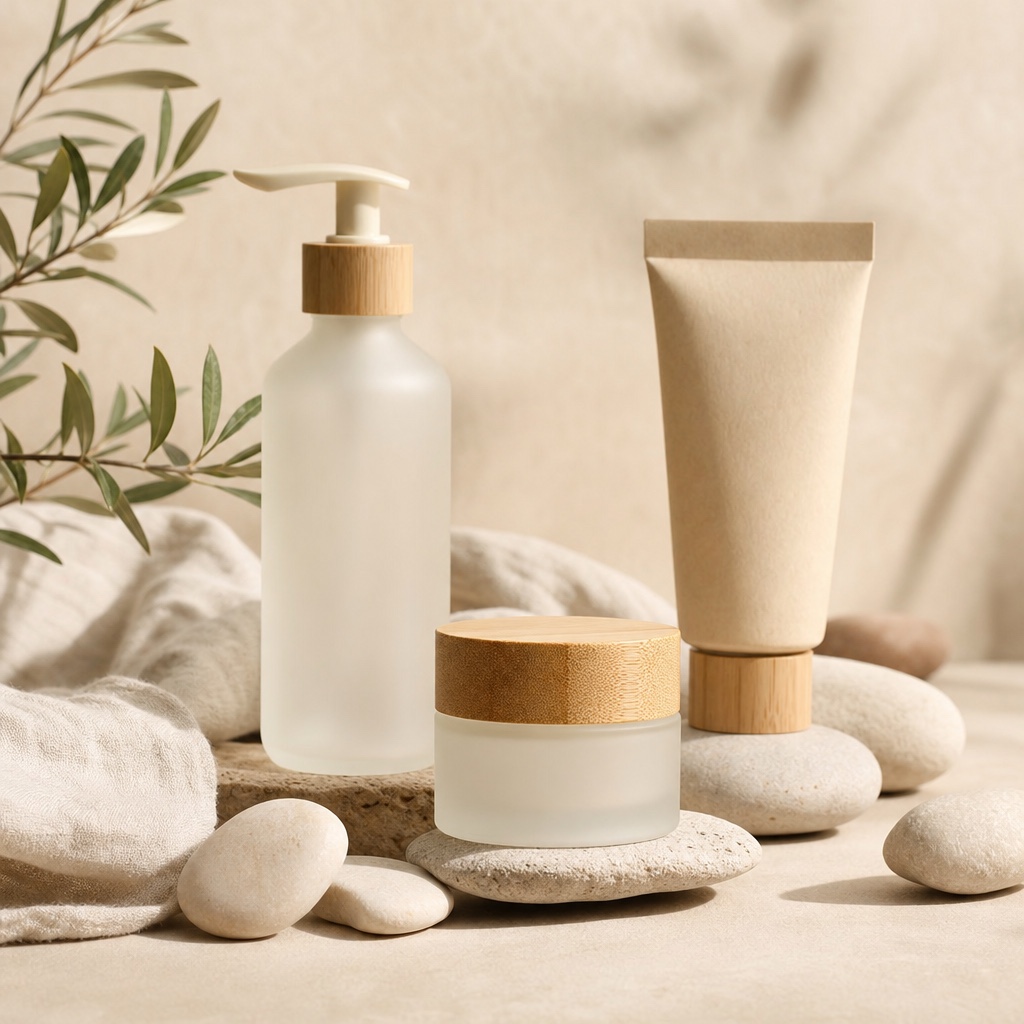
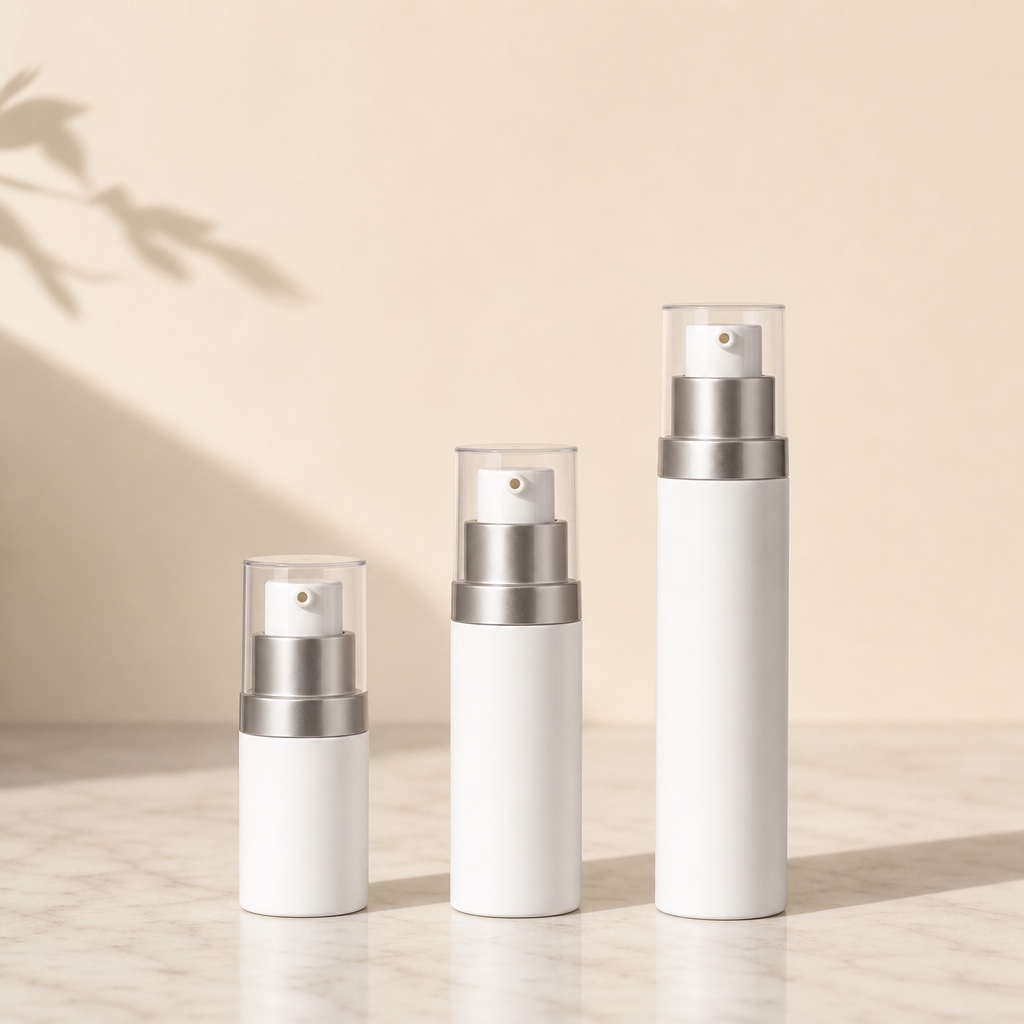
Built for reuse.
Designed to refill.
Twist-lock inner · Click-in cartridge
Heavyweight acrylic · Resin
PCR-PP · Mono-material for recyclability
Lip product · Foundation compact
Refill pod recyclable
Factory ISO 22716 standard
Silk-screen · Premium label
Custom system: 90–110 days
The outer vessel is
your brand on the shelf. Forever.
Refillable packaging inverts the economics of single-use. The consumer buys the premium outer once — your brand stays on their shelf indefinitely. Every refill purchase is a low-waste, high-margin repeat transaction. PPWR is accelerating this format in Europe, but the commercial case exists independently: brands with refillable systems see 30–50% higher repurchase rates than equivalent single-use formats.
Refillable packaging, with numbers.
A refill pod system with a stock outer vessel and a custom pod starts from about 1,000 units through partner factories already tooled for it and runs 40–55 days at the factory gate; a fully custom outer with new tooling starts from about 3,000 units plus a mould at roughly RMB 25,000–70,000 (≈USD 3,500–9,700) and takes 90–110 days. The interface is tested, not assumed: engagement and release force across 100 cycles on 20 samples, and the pod seal held at 5°C and 40°C. Refill spout pouches run 25–35 days on stock film; large-format HDPE refill bottles are stock items from about 500 pieces.
Refill formats: pouch, pod, cartridge and jar cup
| Format | Outer kept / inner replaced | Where it fits | Interface and test | Indicative minimum and lead time |
|---|---|---|---|---|
| Refill spout pouch | Rigid HDPE or PET bottle kept; mono-PE laminate pouch replaced; PCR laminate options | Shampoo, body wash, lotion, hand wash, 250–1,000 ml | Spout and screw cap sized to pour into the bottle neck; seal strength and burst tested on sample batches; barrier matched to the formula | Quantity set by the print run on stock film; 25–35 days stock film and print; 55–75 days custom structure or spout tooling |
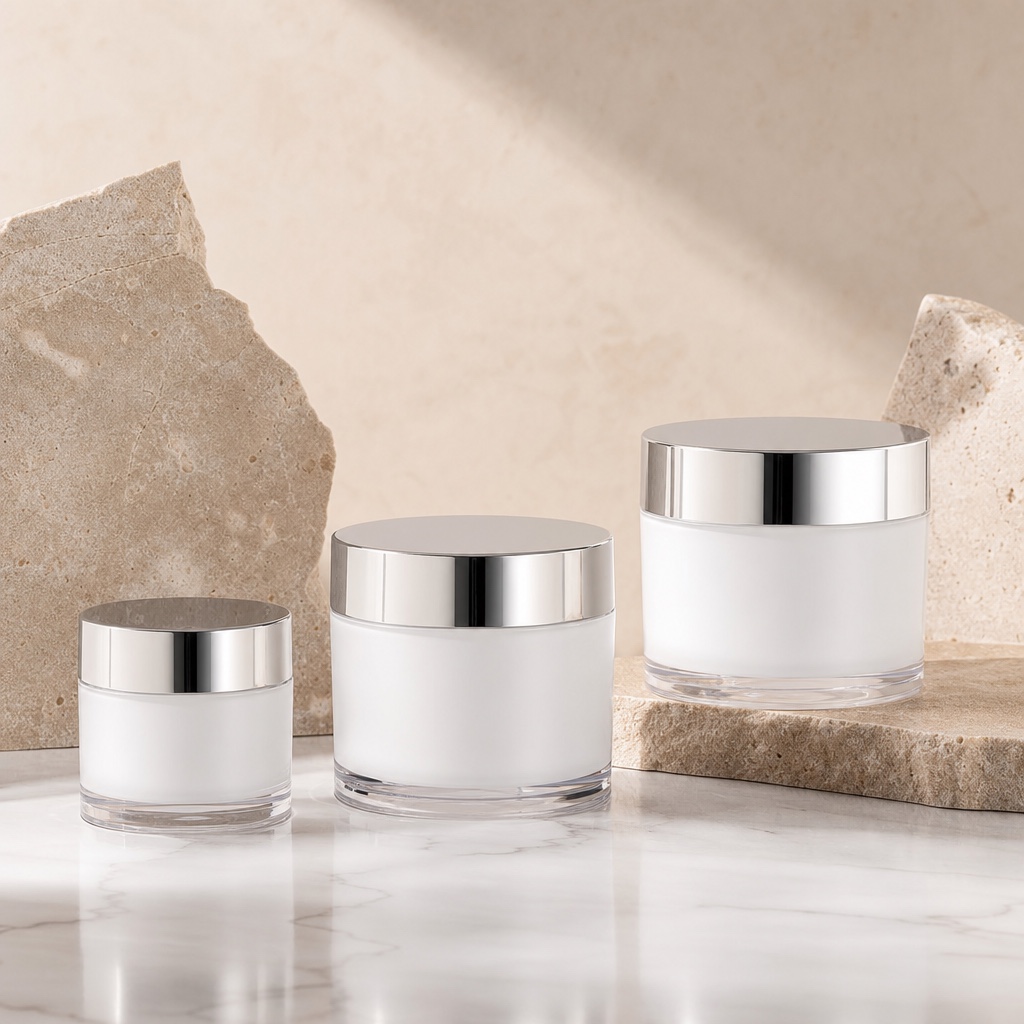
| Inner pod (jar) | Glass, aluminium, heavy acrylic or resin outer kept; PP, PCR-PP or mono-PE pod replaced | Face cream, body butter, hair mask, balm | Click-in pod: engagement and release force measured across 100 cycles on 20 samples; pod-to-outer seal held at 5°C and 40°C; pod compatibility with the bulk tested | Stock outer + custom pod from about 1,000 units; fully custom outer from about 3,000 plus tooling; 40–55 days stock, 90–110 days custom |
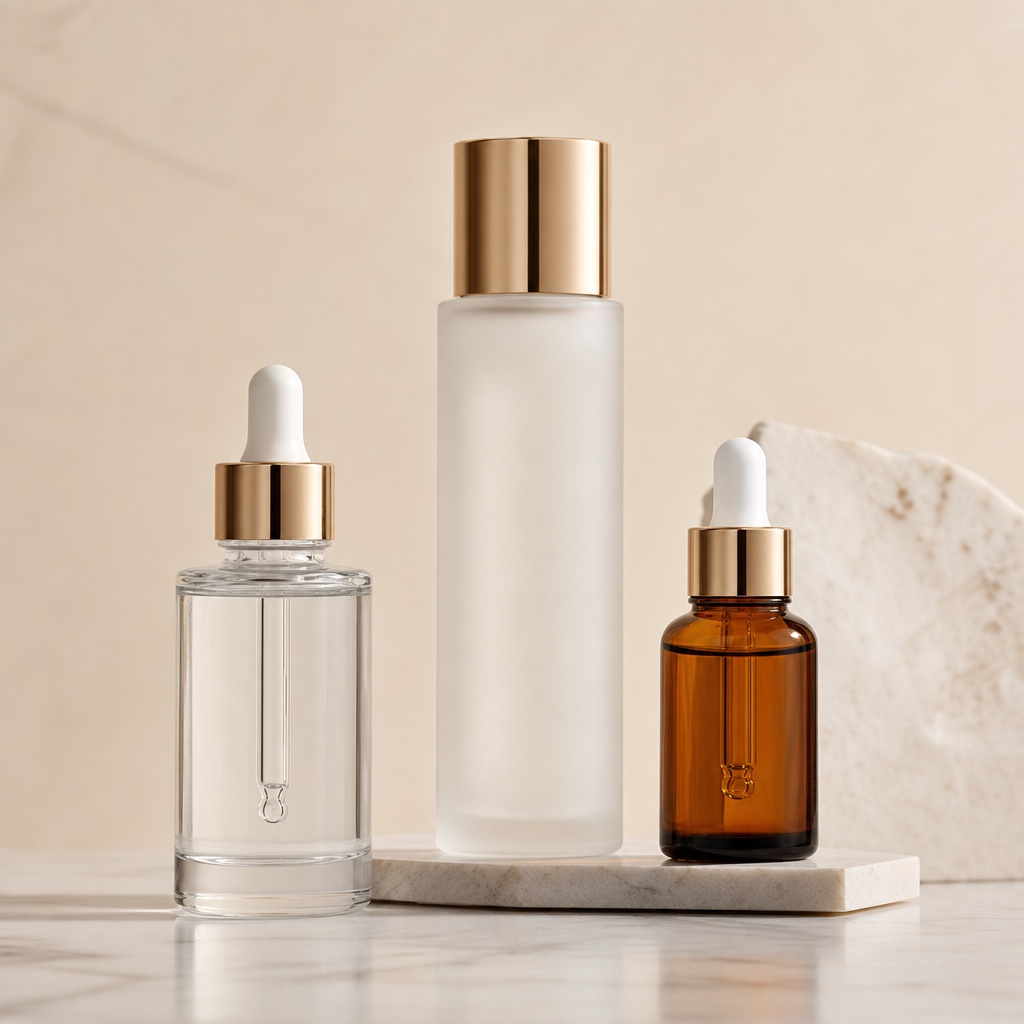
| Cartridge (bottle) | Outer sleeve kept; airless or pump cartridge replaced; twist-lock or click-in | Serum, lotion, foundation | Tested as an airless bottle: −0.08 MPa 15 min ≤0.5%, inner-to-outer pull ≥50 N, priming ≤8 strokes; non-piston self-sealing valve versions suit mono-material projects | Airless assemblies carry a higher floor, around 10,000 for custom; stock airless 20–30 days |
| Jar refill cup | Double-wall PP or glass jar kept; inner cup with lid replaced | Cream, mask | Inner-lid seal by colour-water test at −0.06 MPa for 5 min; cup fit to the outer bore | Stock jars low thousands; 7–25 days undecorated |
| Large-format refill bottle | Small bottle kept; 750–1,000 ml HDPE refill | Wash-off products | Same neck standard on both so one closure fits | Stock from about 500 pieces; 7–25 days |
Specification: outer vessel and inner pod
| Element | Outer vessel | Inner pod / cartridge |
|---|---|---|
| Materials | Glass (flint, high-flint, frosted or sprayed), anodised aluminium, heavy acrylic (PMMA, never touching bulk), resin, double-wall PP | PP or PCR-PP (default), mono-PE where the recyclability claim matters, airless PP/PETG cartridge |
| Capacities | Jar systems 15–100 ml; bottle cartridges 15–50 ml (airless sweet spot); refill pouches 250–1,000 ml | Pod nominal fill matched to the outer bore; airless cartridge 10–100 ml |
| Interface | Bore, click or twist geometry drawn to the pod; magnetic or click-secure lids on premium jars | Click-in, twist-lock or docking; engagement and release force specified as a band |
| Neck finish (bottle systems) | 18/410, 20/410, 24/410 for pump-on-cartridge; airless uses its own collar | Same standard on refill and outer so one closure fits |
| Wall and tolerance | Glass jar wall thickness per drawing; PP double wall ≥0.8 mm typical partner-factory range | Pod wall ≥0.5 mm typical partner-factory range; bore-to-pod clearance agreed on the drawing |
| Seal | Lid gasket or foil seal on the pod | Inner lid + foil seal on pods; airless piston seal on cartridges |
| Decoration | Hot stamp, laser engrave, screen print, spray, anodising | Usually undecorated or a single-colour print; label space for the market's recycling mark |
Indicative MOQ, tooling and lead time by route (partner-factory practice)
| Route | Realistic minimum | Tooling | Factory-gate lead time |
|---|---|---|---|
| Stock outer + stock pod, undecorated | From about 500 pcs | None | 7–25 days |
| Stock outer + custom pod | From about 1,000 units | Pod tool (closure-size part) roughly USD 3,000–10,000 | 40–55 days |
| Stock outer, sprayed or anodised custom colour | 2,000–5,000 sprayed per shape; anodising by batch | Spray set-up per shape; anodising fixtures | 30–40 days sprayed; 25–40 days anodised |
| Fully custom outer + custom pod (private mould) | From about 3,000 units | RMB 25,000–70,000 (≈USD 3,500–9,700) per tool, paid 30/40/30, rated 800,000 cycles, owned by the brand | 45–60 days mould; 90–110 days programme |
| Refill spout pouch, printed | Set by the print run on stock film | Cylinders or plates +5–7 days on new artwork | 25–35 days stock film; 55–75 days custom structure or spout |
| Electroplated or custom-tone metal trim on the outer | ~10,000; does not move through anyone | Racking | 25–40 days incl. plating queue |
| Folding carton for the starter kit | 2,000–5,000 | Cutting die, low cost | 10–15 days after artwork approval |
QC thresholds for refill systems
| Test | Method | Pass threshold |
|---|---|---|
| Pod engagement / release | Force gauge, click in and out, 100 cycles on 20 samples | Force stays inside the specified band; no cracking of the click feature |
| Pod-to-outer seal | Held at 5°C and 40°C, inverted | No leakage, no gap at either temperature |
| Airless cartridge vacuum leak | −0.08 MPa for 15 min | ≤0.5% loss; inner-to-outer pull ≥50 N; priming ≤8 strokes |
| Inner-lid seal (jar cup) | Colour-water test at −0.06 MPa for 5 min | No dye outside the seal area |
| Pump / dispenser life | Continuous actuation, dose weighed 50 strokes ×3 | ≥1,500 cycles; output ≥95% (aqueous) / ≥90% (non-aqueous) |
| Thermal cycling | Filled, 48°C and −15°C, 24–48 h each, 2 h recovery | No cracking, warping, leakage or colour change |
| Drop | 76 cm to 1.5 m at 45°; glass outer in its carton | No functional damage; pod still clicks after the drop |
| Decoration adhesion | 3M 600 tape on print and hot stamp; 3M 810 over 2 mm cross-hatch on spray and plating | No lift; pencil hardness ≥2H on sprayed outers |
| Closure torque | Torque meter | Opening 0.2–0.7 N·m on standard caps |
| Colour | Against the signed golden sample under D65 | ΔE within the agreed tolerance; outer and pod judged side by side |
| Formula compatibility | Pod in contact with your actual bulk 48°C / 30 days | No discolouration, odour, swelling or cracking |
| Heavy metals | Third-party laboratory | Pb + Cd + Hg + Cr(VI) ≤100 ppm |
| Acceptance | ISO 2859-1 | AQL agreed per defect class |
Compatibility: which formula goes in which refill
| Formula | Refill format | Hard rule |
|---|---|---|
| Face cream, balm, body butter | Glass or PP outer + PP / PCR-PP pod | PMMA outer never touches the bulk; pod is the contact material |
| Serum with vitamin C, retinol, peptides | Airless cartridge in a decorated sleeve | Needs the barrier: airless or EVOH; EVOH OTR ~0.2 versus 150–300 for mono PE |
| Toner or mist above ~30% ethanol | Glass outer; PP or PETG cartridge | Never PET; check sprayer gasket and dip tube against the alcohol level |
| Facial oil with essential oils | Glass outer; PP or HDPE pod, silicone gasket | Essential oils attack AS and craze PMMA |
| AHA / BHA at pH below 4 | Glass or PP pod; 316-stainless or plastic pump spring | pH below 4 means glass or PP |
| Shampoo, body wash, hand wash | HDPE bottle kept + mono-PE spout pouch or 750–1,000 ml HDPE refill | Same neck finish on both so one closure fits |
Decoration on the outer vessel × indicative MOQ
| Process | Suits | Indicative floor | Note |
|---|---|---|---|
| Screen print | Glass, PP, aluminium | 2,000 | ≤2 passes combined with hot stamp |
| Hot stamp | Glass, plastics, cartons | Small one-off die; ~1,000 pieces per hour | Classic prestige mark on a matte outer |
| Laser engrave | Aluminium, bamboo, plastic | No tooling; seconds per piece | Permanent; no ink to wear over years of reuse |
| Sprayed colour | Glass, PETG, PP after flame treatment | 2,000–5,000 per shape | Different shapes cannot be hung together |
| Anodising | Aluminium only | By batch | Retain a control sample — a second batch rarely matches without one |
| Electroplating / metallising | Caps, collars, accents | ~10,000 | Exterior only; never in contact with the formula |
Six-module program for refillable packaging
| Module | What we do for this product | Deliverable |
|---|---|---|
| 1 · Spec | Fix outer material, pod resin, interface geometry, force band, seal method, neck standard on bottle systems, label space for the market's recycling mark and the test thresholds above | Packaging Spec Sheet |
| 2 · Source | Route outer, pod, cartridge and pouch to partner factories already tooled for refill systems; quote stock-outer versus custom-outer side by side | Quote + Supplier Options |
| 3 · Sample | Stock outer and pod samples, then decorated set; 100-cycle engagement test, 5°C / 40°C seal, 48°C / 30-day contact test with your bulk | Golden Sample + Compatibility Report |
| 4 · Mould | Pod or custom-outer tool: DFM and mould-flow sign-off, 30/40/30 payment, 800,000-cycle rating, ownership clause | Mould Ownership Agreement |
| 5 · QC | IQC on outer and pod lots, in-process force and seal checks, OQC to agreed AQL as a set | Inspection Report |
| 6 · Ship | Ten-node calendar with ×1.3 buffer and CNY +15 days; glass outers packed to ISTA 3A-style standards; pods bagged against dust | Production Calendar + Packing Standard |
The four refill formats, the certificate schemes and the UK / EU label context are set out on the sustainable and refillable packaging solution; how the empty outer and pods travel is on export packing and transit standards. The test battery is on cosmetic packaging quality standards; formula rules on the compatibility matrix; supplier screening on how to evaluate a China packaging supplier. Sibling formats: eco packaging, cosmetic jars and airless bottles.
Related standards: airless, pump and sprayer specifications · mould cost and ownership · lead time and production calendar · neck finish and closure standards · all engineering references
The click-fit mechanism is the engineering challenge.
Refillable systems require precision tolerances that single-use packaging doesn't. The inner pod must click in securely, release cleanly at refill, and seal without leakage — across temperature ranges and usage cycles. Vella tests all three.
Engagement Force Calibration
The pod must engage (click in) with a satisfying, definitive action and release cleanly at refill. We measure engagement and release force across 100 cycles on 20 samples — drift in force over time means the system degrades and consumers notice.
Seal Integrity at Temperature
The pod-to-outer seal must hold at 5°C (fridge storage) and 40°C (bathroom cabinet). We test seal integrity at both extremes on every sample batch — a seal that's fine at room temperature can leak when warm.
Pod Compatibility Check
The inner pod material and closure must be compatible with the formula — especially for actives, oils and high-water formulas that can interact differently with PP vs PCR-PP vs glass inner surfaces. We test before production.
PPWR Format Documentation
We maintain a current PPWR compliance file for every refillable format we source — documenting the reusability claim, recyclability of the inner pod, and any PCR content. This is the documentation your EU compliance team will ask for.
Frequently asked about refillable packaging.
Often paired with refillable systems.
Read before you brief us.
- Refill Pouch vs Inner Cartridge vs Jar Pod: Which Refill Format Is Cheapest to Launch?
- Sourcing Refillable Cosmetic Packaging from China: Pouches, Cartridges and Jar Pods
- The 100-Cycle Engagement Test: How Refillable Packaging Is Qualified Before Production
- Spout Pouch Refills for Cosmetics: MOQ, Fitment Tooling and Seal Tests
Not sure what to specify? Use the Packaging Spec Builder — formula, volume, quantity and launch date in, a 12-line spec sheet with MOQ verdict and order-by date out.
Tell us what you need,
we'll find it.
Send a brief — format, size, quantity, finish — and we'll come back with factory options, material recommendations and an indicative price within 24 hours.